Kerala is one of the alluring travel destinations in the world. It would be hard for a person to stroll the entire southernmost state of India in a few days. It would be a cumbersome task for one to point out the most captivating factor that grabs the tourist from various corners of the world to Kerala. Among the several fascinating features the picturesque landscapes, breathtaking hill stations, pristine beaches, tranquil backwaters, and mind-blowing collection of fauna and flora attracts the travellers across the globe and propel them to purchase an exciting group tour package from famous tour planners. Kerala is not only the land of wonders and marvellous scenic locations but also a haven for an adventure enthusiast. A wide array of enthralling activities makes Kerala a favourite destination among the tourists. Along with the natural resources, the unique ancient art forms also play a vital role in promoting tourism in the state. Every state and country have their art form and some of them will be a signature for them. One such art form that popularized the state of Kerala is the Margamkali. Margamkali is the eccentric dance art of Christians in the olden days. The peculiar dance steps and fanatic dance attires make the art a luring factor to grab the art lovers from various corners of the world. Narrow down the following paragraphs and absorb the important points regarding the amusing art form called Maragamkali.
Margamkali; a unique dance form of St. Thomas Christians
Even though Margamkali is practised among all the Christian communities, it first originated among the strong believers of St. Thomas and also Knanaya communities. Historians say that the ancient Christian art form has a strong resemblance with the art forms of Malabar Jews. Some others state that most of the dance steps of Margamkali has been adopted from the local art forms like Yathra Kali and Sangam Kali practised by the higher caste called Namboothiri of those days. In colloquial language ‘Margam’ means ‘path’ or ‘way’. The main context of the Margamkali is the brief story of the St. Thomas, the apostle of Jesus Christ. The art form elaborately explains the life history of the saint, his works, sufferings and the hospitality he enjoyed in Kerala and so on.
Some intriguing notes on Margamkali dance artform
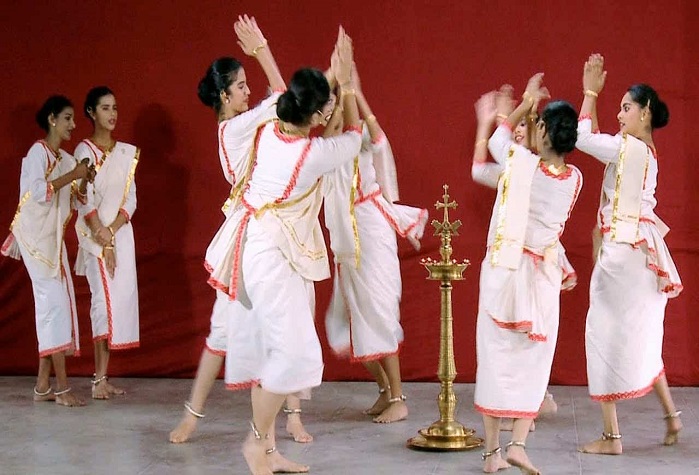
As everybody knows most of the art forms of the olden days are disappearing from the surface of the earth. In olden days Margamkali was practised on special days such as church festivals, marriage ceremonies and so on. To preserve such artforms the state government of Kerala have included these spectacular dance forms in the various competitions in the school and college levels. Witnessing the ancient artforms will help you to learn the various incidents and cultures of the olden days that we haven’t heard or read in any history classes and books. It would be a golden opportunity for the present generations to participate in such events and to be part of ancient times. So, when you purchase the tour packages to Kerala at cheap prices don’t forget to watch the mesmerizing Margamkali. To make your journey hassle-free avail of the tour services from the well-renowned travel operators. Gogeo holidays curate the packages for the travel enthusiasts residing in the metropolitan cities such as Bangalore, Mumbai and Chennai.
Initially, a dozen male artists used to perform the scintillating dance form. Now the male dancers have been replaced by the female. The dancers appear on the stage by wearing the traditional clothes called dhoti and blouse, famously known as ‘mundu’ and ‘chatta’ in colloquial language with red and gold borders. Along with the unique costumes they also wear the ornaments that highlight the Christian religion such as ‘Mekka Mothiram’ and also by wearing bangles on the ankles and hands. Unlike any other dance forms, Markamkali dance forms do not use any external musical instruments other than the two palm-sized cymbals. They dance in front of the lighted lamp which denotes Jesus Christ. The 12 performers denote the 12 disciples of Jesus Christ. There will be two persons who sung the song describing the works of St. Thomas. The song consists of more than 5 stanzas.
MargamKali has strong similarities with other art forms
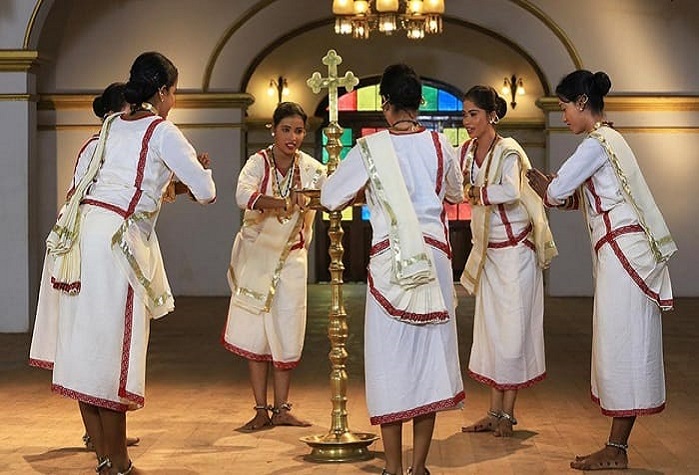
Many scholars have reported that Margamkali has a strong influence with other national and international art forms such as miracle plays of the United Kingdom and social amusements of famous Babylonia. Margamkali has a strong influence with the other Hindu art forms of Kerala called Chattira Ankam, Samghamakalli, and Panemkali of the upper caste known as Namboothiri. It was in 1910, a collection of famous Margamkali pattukal was published by the famous writer called Putehnpurakkal Uthup Lukose. Along with Markamkali, devotees also practised Vattakali or round dance and Pallipattu and so on.
Margamkali is widely practised in the southern parts of Kerala
Margamkali is widely practised by the Malankara Christians. To enjoy the beauty of the dancers’ avail of the packages to the southern parts of Kerala namely Thrissur, Ernakulum, Alleppey, Kottayam, Idukki, Pathanamthitta, Kollam and Thiruvananthapuram. But now you can catch its glimpses in the school and college-level competitions.
Hope you would have gathered the vital information regarding the marvellous art form of Kerala called Margamkali from the above paragraphs. If you want to learn more about the ancient art forms similar to Margamkali grab the packages from Gogeo Holidays. They curate the packages by inculcating mind-blowing destinations such as Munnar, Thekkady, Wayanad, Kannur and so on. To give a brief idea about the unique culture and traditions they include places where the eccentric artforms are performed. To avoid the last moment rush, grab the packages as soon as possible. You can clarify all your queries regarding the tour services by communicating with their customer representatives during the office hours. When you pack your bags for the thrilling Kerala trip do not forget to include a high-resolution camera with you so that you can capture the splendid images of the state and its unique features.
 Gogeoholidays